There’s an old notebook I once kept by my bed where I’d doodle portraits of characters (badly) and sometimes doodle myself, sitting at a table in Waterstones, signing books. I was 14 at the time. I was pretty miserable, but I loved writing just as much as I do now. The notebook had pale pink pages and I told it everything.
Some pages had character descriptions and plots. Some had illustrations of what I wish I looked like. Some had wishes I’d send out to the universe. These were mainly about being a writer.
Years later, when my third poetry book was published, I stared at the book on my shelf with a similar disbelief. I half-expected it to vanish like a mirage. “How did this happen?” I asked myself. Not always with elation, but with something nearer to suspicion. I’d launched it at Waterstones, just as I’d dreamed I would.
I still have that old notebook.
So why, whenever an exciting email drops into my inbox, do I still think, “You’ve got the wrong person! There’s been a mix-up!”
Say hello to imposter syndrome.

What is imposter syndrome?
Imposter syndrome is the persistent, internalised fear of being exposed as a fraud, despite external evidence of success. For writers, it doesn’t matter how many words we’ve put down or how many readers have praised them. That inner voice still whispers: “You don’t really belong here. You’re going to get found out.”
Imposter syndrome, first identified in the 1970s by psychologists Pauline Clance and Suzanne Imes, was initially thought to primarily affect high-achieving women. Today, we know it’s more democratic. A 2020 review in the Journal of General Internal Medicine found that up to 82% of people face it at some point. But for writers (those of us who deal in very personal things), it takes on a particular shape. The cruel irony is that those whose stories most need to be heard often face the greatest internal (and external) resistance.
For writers from marginalised communities (e.g. writers of colour, queer writers, trans writers, disabled writers, working-class writers) imposter syndrome is not just psychological, but also structural, historical and cultural. Because the literary world has long been shaped by gatekeeping, by the dominance of certain voices and the exclusion of others, marginalised writers carry not only the weight of their own self-doubt, but also the weight of centuries of erasure. The fear is not just: “Am I good enough?”, but it’s also “Will I be allowed in? Will I be believed? Will I be read fairly, or exoticised, or flattened into a trope?”

The fear of being found out
Now that I’m working on my first non-fiction book after years of seeing myself as primarily a poet, I often find myself writing on the sofa with the dog curled against my legs. I start at 4am, when the world is quiet, and no one can catch me in the act of pretending to be a different kind of writer.
It feels like a kind of performance, even after all these years. I tell myself that if I can get enough pages done before the sun spills its apricot light across the lawn, I can maybe trick myself into legitimacy.
And yet, even now that I’m so close to finishing that manuscript, I feel I’ve pulled something off rather than created something honest. I expect someone, whether that’s an editor, a mentor, or a reader, to tap me on the shoulder and say, “We’ve found you out.”
Imposter syndrome is a stubborn sort of companion.

Where does imposter syndrome come from?
There’s a kind of magic trick that happens when you admire someone else’s work: you see the polished surface, the shimmering narrative arc, the effortless lyricism, but you forget what’s underneath. There are so many times I’ve bought myself a new book to inspire me, only to despair at the fact I’ll never, ever be that good.
But what you don’t see are the false starts, the ugly drafts or the despair at 2am. You forget that these amazing writers are, too, just people like you. These aren’t the Instagrammable bits and so they stay hidden. When we compare our behind-the-scenes with others’ highlight reels, imposter syndrome thrives (sometimes, I have to remind myself that if I posted every rejection I ever got, Meta would probably ban me for spamming the algorithm).
This is particularly true in a creative field like writing, where so much of the work is invisible and failure is part of the process. We still don’t talk about it enough, though. A 2017 study published in the International Journal of Behavioral Science found that perfectionism, early family dynamics, and social comparison are strong predictors of imposter feelings. Writers, who spend much of their lives internalising voices (both their own and others’), are especially vulnerable.
In other words, it’s normal. Please don’t feel like you’re the only one who feels like you’ve just gatecrashed the party.
In literary culture, we often fetishise genius and romanticise struggle, as though suffering is a prerequisite for legitimacy. If you’re not tormented, are you even a writer?
The funny thing is, that over time, you start to believe it.
Writing through imposter syndrome
I’ve found strange comfort in knowing how many of my literary heroes have admitted to the same internal chasm. Maya Angelou, who published more than thirty books, once said: “I have written eleven books, but each time I think, ‘Uh oh, they’re going to find me out now.’”
Maya Angelou, mind.
Someone once told me that maybe imposter syndrome isn’t a sign of failure – maybe it’s just a natural side effect of caring deeply about your work. I like this. Maybe it’s the fear of telling the truth, even when you’re not sure it will be welcomed.
As writers, the most powerful thing we can share is our truth.
Some tips to overcome imposter syndrome
No Instagram quote or cringey self-talk in the mirror will permanently silence the imposter voice. But certain things, I’ve found, help me turn the volume down.
1. Keep a “good things” folder
I have a document where I collect messages from readers, reviews or editors (this idea was shared by the brilliant John McCullough, and yes it works). On bad days, I read them; not to stroke my ego, but to remind myself that my words have, at times, landed.
2. Read author interviews
Writers are often very honest in interviews. Surprisingly so, even. My favourites are often the messy ones, where they admit to crying over rejection or hating their first drafts. It helps me remember that no one arrives fully formed.
3. Find your community
Being part of a group of like-minded writers helps me so much. Not because they validate me, but because they see the work for what it is and hold me accountable to keep showing up. They’re also very good at talking me out of a spiral following a rejection, so I can pick myself up and keep going again (huge thanks to my Salty Poets).
And what doesn’t help? Perfectionism. Endless revision as a way to delay sharing, comparing your journey to someone else’s timeline or just expecting the imposter syndrome to disappear.
It won’t. But you can learn to acknowledge it and live with it without letting it hold you back entirely.
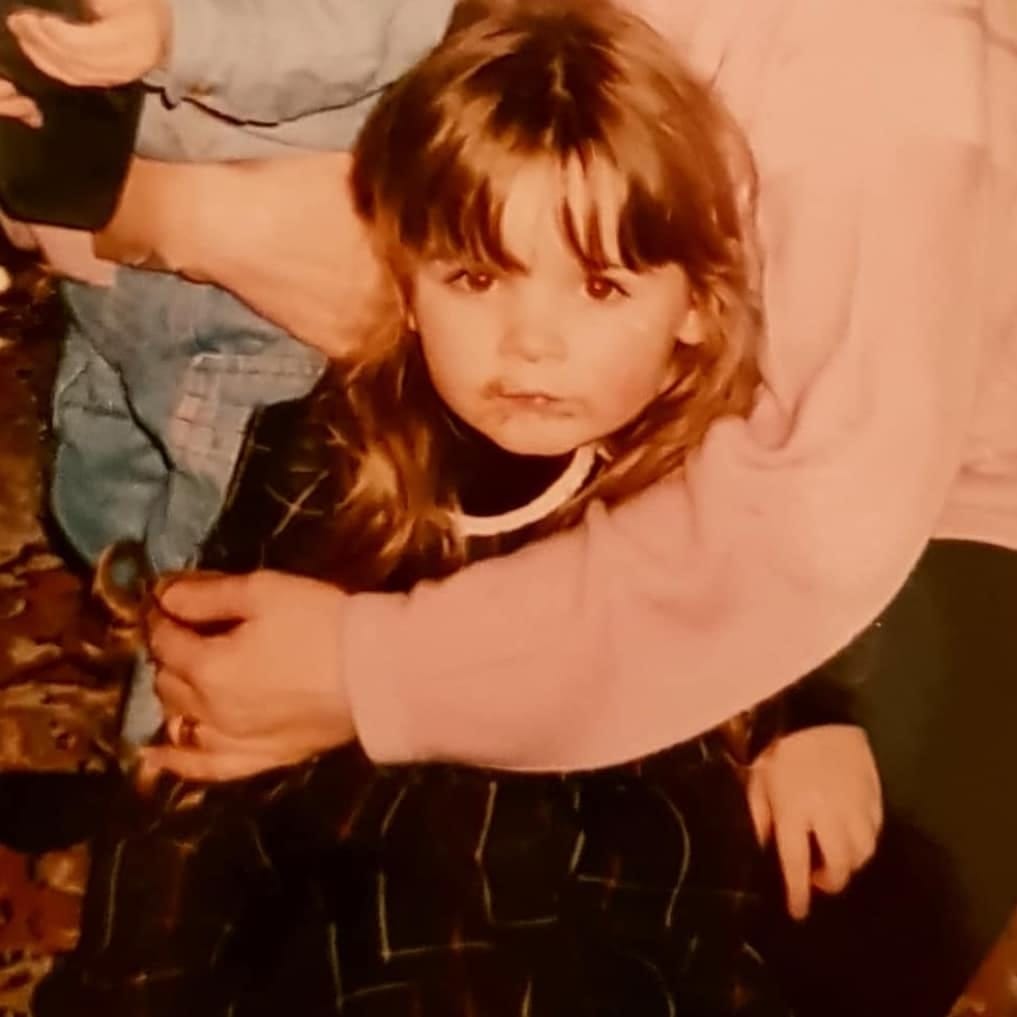
A note to my younger self (and to you, too)
If I could go back to that eleven-year-old girl with the pale pink notebook, I’d tell her this: You don’t need permission and you’ll never need a certificate that says you’re real. If you write, you are a writer. (The image above is me on my third birthday party by the way, carefree and covered in chocolate. These were carefree days before being a writer.)
Imposter syndrome isn’t a flaw in your character. It’s a normal part of being human, particularly for those of us brave (or foolish) enough to wrestle meaning from language. To be a writer is to live in the tension between what you long to say and what you’re afraid you can’t.
But somewhere in that tension is where the real magic begins. Keep writing.

 Natalie Ann Holborow
Leave a comment