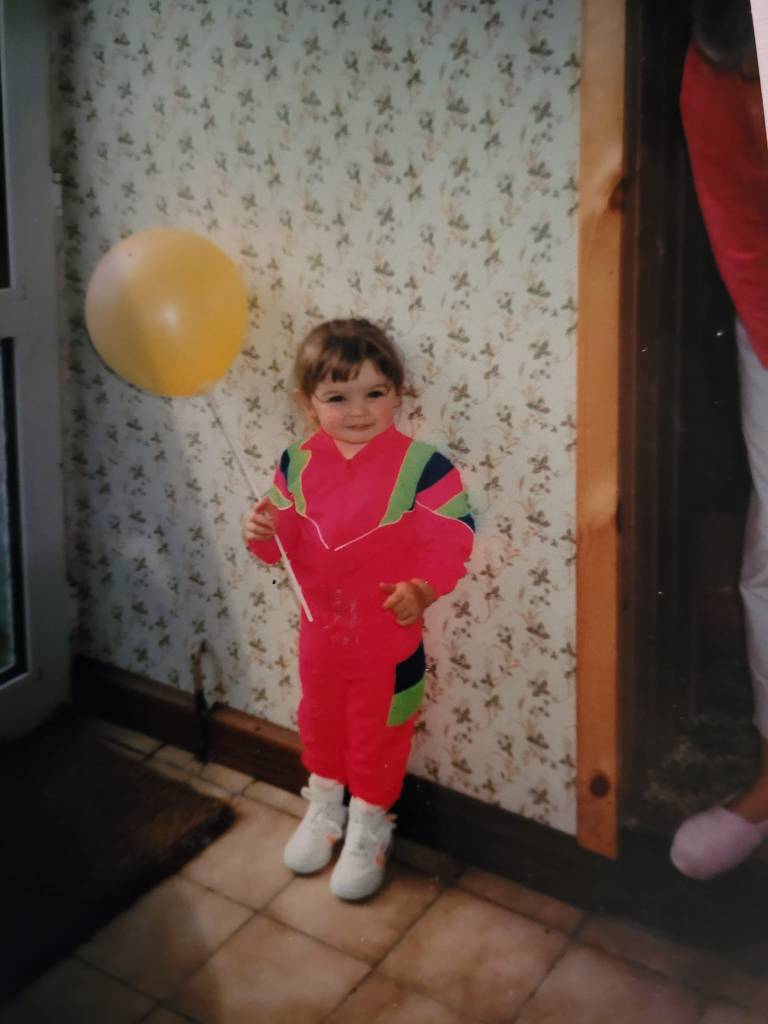
I never really liked making my voice heard. As a kid, I was far happier tucked away somewhere quiet with a book than throwing rubbers across the classroom and shouting back at the teacher. I never wanted to be Mary in the school nativity play, either; blending into the background with a tinselled head and a makeshift bedsheet dress was just fine, thank you very much.
But even that made me feel queasy.
I didn’t grow up dancing in front of mirrors or performing dances in assembly (apart from that one time I was coaxed into doing a routine to Hear’Say. My dancing career both started and ended there). I liked the margins, where I could just sit and watch. And I liked writing things down quietly, without having to read them aloud or explain them to a room.
And honestly, I still do.
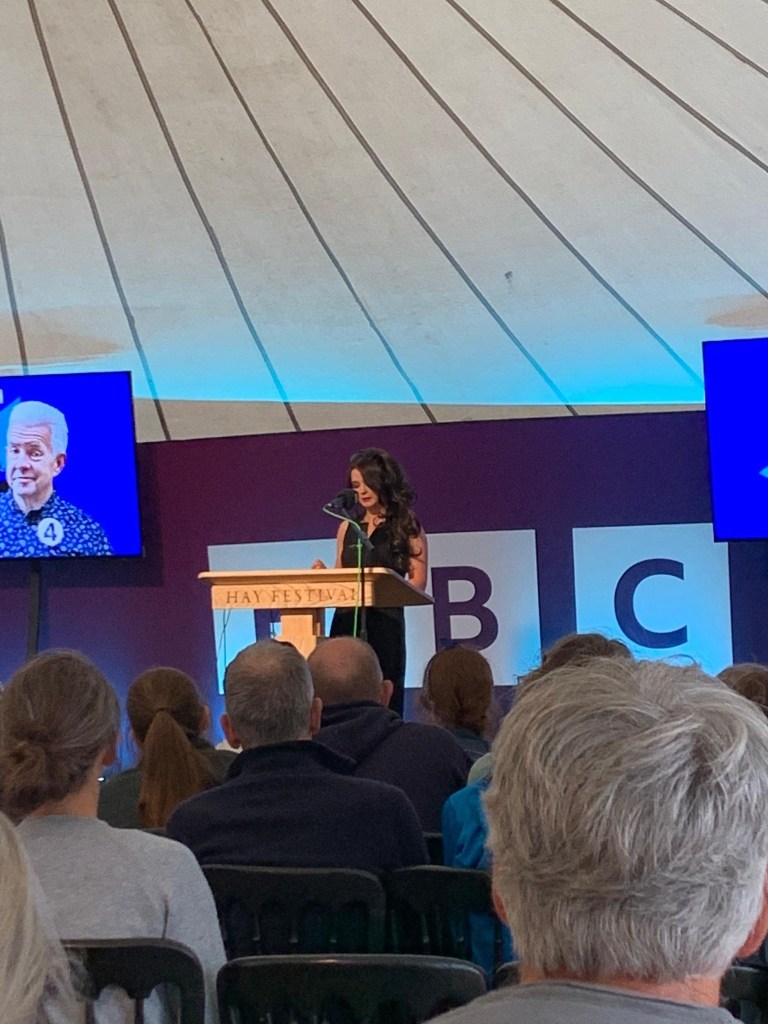
Why writing feels easier than speaking
If anything, the older I get, the more weird I seem to feel about the idea of being seen. Which is a real shame, because I’ve somehow ended up doing a thing (writing poems) that regularly demands public readings, interviews, and the kind of cheery, self-promotional digital presence that, for some people, is a natural extension of their joy. For me, it frequently morphs into a source of anxiety.
I admire those who can project their voices and captivate an audience with enviable charisma; people who stride into a bookshop event or onto a festival stage like it’s their natural habitat, like the whole thing is just a well-lit conversation with 90 of their closest friends. I admire those who don’t need to take some very deep breaths into a glass of wine and rehearse the introduction in their head.
It’s not even that I hate people, because honestly, I don’t. I love people. I love listening to them. I love strange conversations at bus stops and quiet confessions in dimly-lit bars and seeing someone’s eyes come alive when they get to talk about the thing they care about most. I just struggle to meet the moment out loud in real time. My thoughts arrive in clusters, too many at once, and all of them seem to be jostling for the exit. So, while I’m trying to select the right one, the silence between question and response starts to feel like a slow-growing disaster. Then I panic. I say something half-baked or weirdly intense, or I try to make a joke that only works on paper, and then I spend the next three nights awake in bed, reliving the exchange in forensic detail.
Writing, on the other hand, gives me space. It gives the nervous, stammering parts of me room to unfold without pressure. With a pen (or a keyboard) I can try the sentence a hundred different ways until it feels true. I can sit with a feeling long enough to name it properly. I can speak, without speaking, in a voice that feels more honest than the one that wobbles when someone asks me what I write about at a party.
Some people are born with voices made for rooms. Others find their voices only when no one is watching. I am the latter. But a writing career will demand that you speak as well as write if you want to get ahead.
The good news is that you can at least simulate some sort of confidence. And over time, you can bring yourself home to your words in a way that makes you look more confident than you feel.

The strange weight of being perceived
Readings. Events. Panels. I’ve done enough of them to know that the lead-up to one reliably makes my body behave like there’s a bear about to launch itself out from the front row and eat my head.
You read your poem. It lands, you think. Someone nods. Someone frowns in the good way. And then, as you stand there, having just said a thing you spent months crafting in solitude, you smile like a normal person and thank everyone for listening, while silently longing to teleport directly to your bed and lie face down for a while.
But the anxiety doesn’t stop when the event ends. It just shifts to become this low-frequency buzzing, a kind of post-performance fog. You replay everything. Did I talk too fast? Did I seem too intense? Did I accidentally read that grief poem with a weird half-smile on my face?
And then there’s the most lovely, but also most terrifying part: the compliments. They mean the world to me, they really do. I never take it lightly when someone finds the courage to approach a stranger who’s just read a poem about their grandfather’s death or their period of darkness or their inexplicable grief at losing a friend they hadn’t spoken to in years. It’s a small act of bravery to walk up to someone in that vulnerable post-performance moment and say, “That moved me.” Or “That was beautiful.” Or “I felt seen.”
There’s a strange guilt that creeps in when someone compliments your work and you don’t fully believe it. Not because you think they’re lying, but because you’ve lived with those poems for so long that you can see all their flaws. You know where the rhythm stumbles. You know where the emotion leans too hard, or doesn’t lean hard enough. You remember the earlier drafts, the less successful versions, the clumsy metaphors you couldn’t quite kill. You hear the voice you wanted and the one you ended up with. So when someone tells you a poem was “amazing,” your first instinct is to want to correct them. Are you sure? That line break sounded clumsy out loud.
The irony is that you also worry about seeming arrogant if you accept the praise too readily. There’s a tightrope between humility and deflection, and I never feel quite steady on it. Accepting a compliment is a kind of emotional dexterity I’ve never fully mastered.
Too much enthusiasm and you risk sounding smug. Too little and you risk sounding dismissive. And somewhere in between is the fact that you are so grateful to be heard, but terrified to be wrong about deserving it.

Social media (the quiet person’s nightmare)
I don’t hate social media. I understand its usefulness. I’ve even met some truly kind, generous people through it. It is, above all, a platform for captioning photos of my dog. But for someone like me, who writes as a form of shelter, social media often feels like being asked to scream into a megaphone and then smile apologetically after each blast.
It work as a Content Marketing Manager, so I work with socials every day. But there’s something a little less terrifying about hiding behind a brand, where strategy is meticulously planned and there’s a clear purpose behind every post (and a professional designer).
On my personal social media, things feel a lot more vulnerable. But when there are books and events to promote, you have to be present. You’re expected to post about your work with moody lighting and an aesthetic writing setup when really you’re sitting in your dressing gown wondering if your last poem was just a formal complaint with line breaks.
And when something good happens (let’s say, you win a little prize, or you get longlisted for something obscure but meaningful), you’re supposed to announce it. You’re supposed to celebrate. But every time I do, I feel like I’ve walked into a crowded room, climbed onto a table, and shouted, “EVERYONE! I HAVE ACHIEVED SOMETHING! LOOK!” It’s not pride I feel. I think it’s actually profound embarrassment, like I’ve violated some unspoken rule of British modesty and will now be asked to leave the internet.
Sometimes, I try to temper it. I post a photo of my dog chewing the corners of my book, with a caption like, “Chuffed (and a bit shocked!) to be included…” Which, in translation, means: “I’m quietly thrilled and am also going to immediately regret posting this.”
I dress neatly and hold my notes. I smile when asked about inspiration, though I know the real answer lives in something I can’t articulate. I laugh politely at jokes and nod. I talk like I know what I’m talking about, even if it’s from an overly-rehearsed script in my head.
The introvert writer’s contradiction
I can’t count the number of times I’ve left a venue and walked straight into a bathroom to cry. Kind of like a soft, worn-out crying that happens when you’ve been a little too open in public and now your body doesn’t quite know what to do with itself.
That’s the part people don’t often see. Sometimes your skin feels too thin after reading. There’s a strange, aching loneliness that arrives just when everyone else thinks you’re basking in the spotlight. Only a few weeks ago, I couldn’t even hide the fact the strawberry poem about my grandad had just about finished me off.
So why do I keep saying yes to readings? To interviews? To posts announcing things that make me feel like a fraud or just a royal pain in the arse?
I may not enjoy being seen, but I do love being understood. And every so often, someone writes to me or stops me after a reading and says, “That poem felt like you wrote it for me.” When that happens, I remember why I started this in the first place.
Poetry, for me, has always been about connection. I write because otherwise I’d carry it all alone. When someone else sees their own ache inside my words, there’s a connection there that honestly makes it worth it. I’ve made so many wonderful connections through writing and met so many brilliant people who I now call friends.
And that is why I write.
If there’s one thing I’ve learned, it’s that being a poet sometimes means living in a constant state of contradiction. You want to be read, but not looked at. You want your work to reach people, but you panic when it does. You crave solitude, but somehow end up in rooms full of people drinking warm white wine and asking, “So, what inspired that last piece?”
I return home and hang up the coat I wore. I sit again at my desk. And for a long time, nothing comes.
But then, eventually, I begin again. It feels much like coming home.


 Natalie Ann Holborow
Leave a comment