I didn’t get into writing because I wanted to learn how to “build a brand” or “leverage a content funnel.” I got into writing because I liked watching the rain crawl down a windowpane and because I love channeling meaning into carefully-selected words. Given the choice between analysing Google Analytics for an hour or writing a poem about a sad fish, I’ll take the latter.
But if you’re a writer with a book in the world, you’ll end up wearing a dozen other hats. Publicist. Social media manager. Newsletter curator. Blog writer. Self-doubt exterminator.
You’ll also likely start building up a content ecosystem, which has nothing to do with nice plants in hot glass domes. It basically refers to the interconnected network of platforms and formats you use to share your work all working together to amplify your voice, grow your audience, and keep your creative presence alive.
Over time, I’ve learned to view these things not as separate, anxiety-inducing tasks on a to-do list, but as parts of this little ecosystem. They don’t need to all start shouting over one another, but rather they just need to start talking to each other. And when they do, it becomes easier to show up.
Here’s how to make these things work without burning yourself out.

Think about your blog
Most writers have a website, but not every writer uses their blog. I mean, you don’t have to if it’s not your thing. You’re probably too busy writing other, more important things, and having someone telling you to write more stuff probably makes you want to throw something at my head (which is fine). But it’s worth investing time in a blog post now and then.
A blog, when done right, isn’t just an archive of updates but a conversation with the reader who’s willing to sit down and stay a while, squinting at their screen with interest. It’s not constrained by character counts or algorithms that favour reels of your face doing a voiceover. Over time, keeping a regular blog cadence helps the relevant audience find you in Google Search (higher Google Search results = more eyes on your work). Months or even years after you post, someone might stumble across your piece about writing through anxiety, for example, and feel a little less alone (this happened to me the other week).
Instagram captions can hint at the edges of something, but your blog can unfold the full shape of it. For example, you could write about that time you panicked mid-poetry reading and what it taught you about the kindness of strangers. Or perhaps you could use it as a place to show the real work behind that prize-winning piece of writing. Or maybe your blog could be a place to explore more deeply that strange ache that follows after finishing a manuscript; a mix of elation and grief to say goodbye to something that has been a central, private part of you for so long.
Your blog doesn’t have to be polished or keyword-optimised or dressed up like a lifestyle magazine, mind you. It just has to sound like you. If you write conversationally, do that. If your voice is poetic, embrace it.
Readers come to your blog because they want to hear you, so have fun with it.
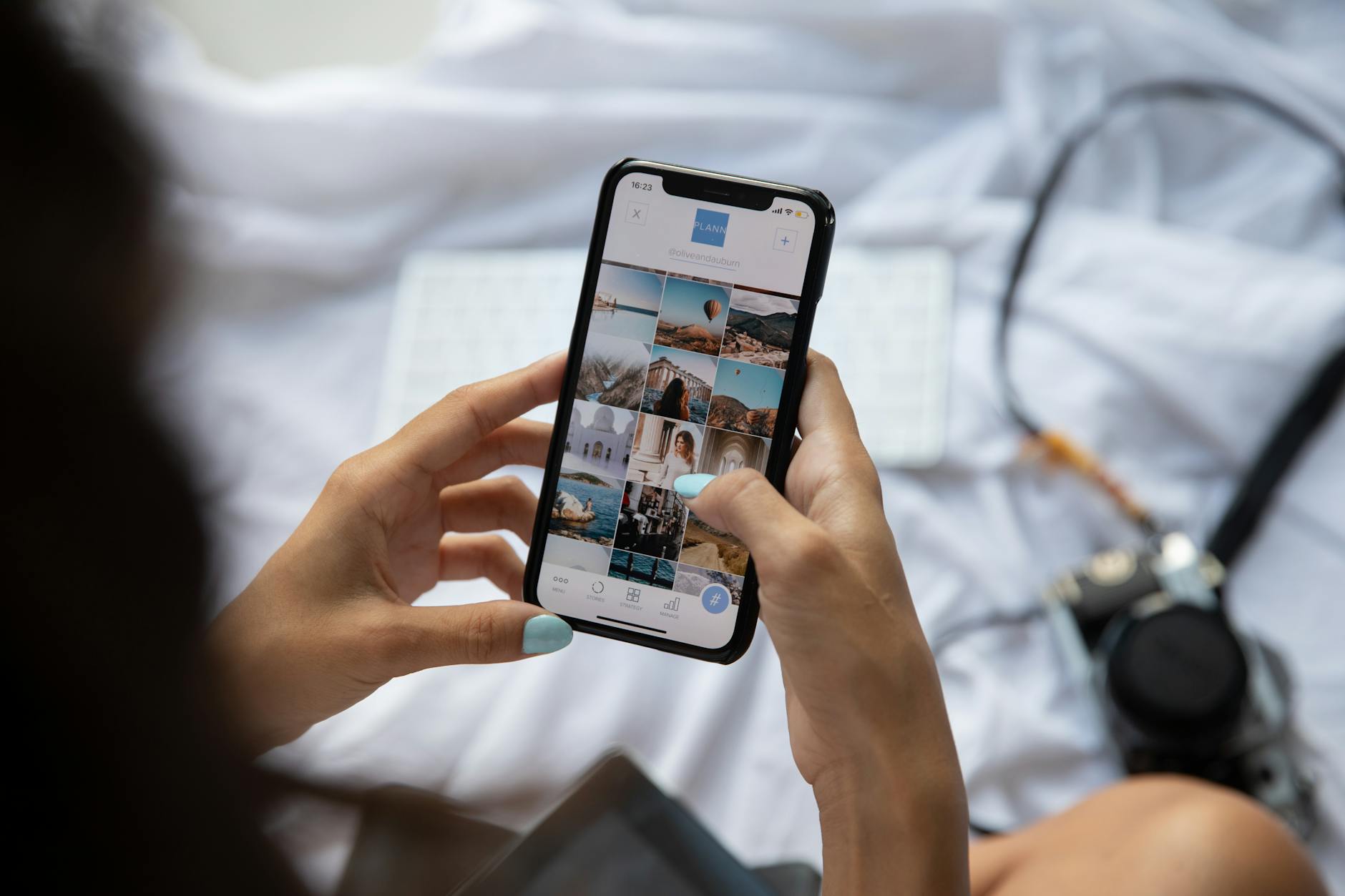
Social media for writers
Social media can feel like walking into a party where everyone’s already mid-conversation, and you’re standing in the doorway in your slippers yelling: “DOES ANYONE WANT TO SEE A PICTURE OF MY DOG?”
(I would always like to see a picture of your dog, by the way.)
For writers – especially those who feel more fluent in silence than in selfies – platforms like Instagram, Twitter (sorry, X), Threads, Facebook, TikTok, and even LinkedIn can be a kind of performance art that feels far less authentic than our writing. But it doesn’t have to be.
It can be an extension of your writing practice, not a distraction from it, if you let it serve the work, not the other way around.
If you’ve already written a blog post – say, about how to use music and rhythm to help your writing practice – you don’t need to start from scratch to post online. You can:
- Share a quote from it as an Instagram post or tweet.
- Turn a section into a mini-thread or carousel.
- Record a short video talking about the moment that inspired it.
- Use a question from the post as a conversation-starter for your audience.
- Pair a poetic line with a visual moment from your day, even if it’s just the curled spine of a book or a pile or a proper nice field or something.
When you’re stuck for ideas, repurpose what you already have. Point people to your website or to an event or to your work. If you want to keep your personal and writing life separate, create different accounts. Not everyone is comfortable sharing the whole picture and that’s totally fine.
What about the cringe? What about when you want to share something but also don’t want to seem insufferable? You want to say “I’m proud,” but it comes out more like “I’m sorry to interrupt your scrolling, but I accidentally achieved something.”
I totally get it. I find it helps to try reframing the post as a thank you or an invitation. Talk to the people reading it and it’ll feel less like you’re throwing a party for yourself.
By the way, you’re allowed to feel good about an achievement you’ve worked hard for (even if it feels weirdly like a crime). Share some of the behind-the-scenes stuff and people will understand that it took a lot to get there and acceptances didn’t just fall into your lap.

Starting a newsletter
Many writers have brilliant newsletters. One of my personal favourites is Suppertime by Emily Vanderploeg, which is a wonderful balance of literary recommendations, everyday musings, writing updates and delightful-sounding dinners. Every time it hits my inbox I have to pause what I’m doing to read it, knowing I’ll feel uplifted. Dwell by Kathryn Tann is another newsletter that always feels like a treat in my inbox; the writing is sublime and it transports me, momentarily, from my desk to more beautiful places.
I do not have a newsletter (yet). I keep planning a newsletter but it’s the one thing on my to-do list that I never seem to tick off. But it’s worth having one (and I will, one day, when I don’t prioritise stealing my neighbours’ pears on Animal Crossing instead). But I know that many writers have a lot of success with them.
There’s something sacred about the inbox, isn’t there? It just feels quieter and more intentional. I suppose where social media is like calling from your window and waving, a newsletter is like sitting down across from someone and saying, “Here, I wrote this just for you.”
Your newsletter subscribers have asked to hear from you. They gave you their email address, which in the age of digital noise is basically the equivalent of someone handing you their phone number and saying, “Hey babe, please hit me up with some of that beautiful writing of yours.”
On average, the best frequency for newsletters are no more than twice a week and at least once a month (Campaign Monitor). For writers, I’d say once or twice a month is best. You don’t want to burn yourself out and you don’t want to start annoying people with the frequency, either (running shoe companies, I’m looking at you. I do not need to buy shoes five times a week; poems aren’t going to fund that many Nike Vaporflys thank you).
Start simple. Subscribe to a few writers’ newsletter first to see how others are approaching it. And if you’re still stuck for ideas, here are a few to get you started:
- A personal note about what you’re writing (or struggling to write).
- A link to your latest blog post, plus why it matters to you.
- Something you read this week that stayed with you.
- A question for your readers: “What’s something you’ve been trying to write, but can’t quite say yet?” You might be surprised who writes back.
- Create a “writer’s desk” series: a monthly note from wherever you’re working (even if it’s the floor, next to the laundry).
- Include links to others’ work too. Generosity is part of the magic.
- Anything else that has brought you joy this week outside of writing.
You don’t need a flashy header or a fancy layout. Just write like someone’s listening, because someone is listening.

Bringing your content ecosystem together
Think of your blog, your social media, and your newsletter as three core branches of the same tree:
- Your blog is the reflective space where your thoughts have space to breathe. It’s a place where you’re in control (i.e. your content doesn’t just disappear when a platform disappears). Your blog can host the content that search engines can still find two years from now.
- Social media offers the chance to reach someone new and keep the conversation going with those who already know you. It’s where you can share things and build up excitement for something you want to share (e.g. an event, a publication or an announcement). It offers little glimpses into you as a writer.
- Your Substack or newsletter, meanwhile, is the more intimate conversation. Over time, a newsletter builds trust and a genuine connection that’s hard to fake. It’s where readers stop being “followers” and start becoming a kind of community.
But your content ecosystem doesn’t have to stop there. Your readings and live events can feed back into blog reflections and Instagram posts. A poem rejected by a journal might become a newsletter about resilience. A DM from a reader could spark a thread, an idea for a video or even a whole new piece of writing.
Each platform doesn’t have to shout the same message, so long as they echo each other with intention. That’s the beauty of a content ecosystem: you spend time tending one thing to give you ideas to grow elsewhere.
You don’t have to do it all at once. You’re not a one-person creative agency fuelled by inspiration and HobNobs. And you don’t have to be everywhere either, just in the places that feel relevant (for more tips on reaching a relevant audience, here’s a guide I wrote on how to do marketing as a writer).
Show up consistently. Show up in your dressing gown at 2am yelling at your laptop, “IS THIS ANYTHING?”
Eventually, I promise the whole tangled mess of blog posts, captions and newsletters will stop feeling like a chaotic to-do list written by a caffeinated octopus and more like it’s falling into a rhythm. Like a conversation you’re not just broadcasting into the void, but actually having with your readers.

 Natalie Ann Holborow
Leave a comment