There are days when writing feels like the loneliest thing in the world. You might have been typing away (or scribbling in a notebook) for hours, barely aware of the sound of your own breathing or the fact that the TV has been looping on the shopping channel for the past three hours, trying in vain to sell you the best ironing board the world has ever seen. You are in your own mind, trying to untangle something that doesn’t exist yet, but that you’re determined to bring to life. And the longer you sit with it, the harder it becomes to believe it’s going anywhere.
Often, in these moments where you’re exhausted and stuck, you reach down.
For some writers, there’s a cat, purring softly, curled into a soft heap. For others it’s a sprawled-out dog, twitching in a dream about chasing the postman or breaking into the fridge. Or it could be a rabbit squatting nearby, ears slightly tilted, gnawing through an expensive pair of slippers.
I’ve been thinking a lot lately about the animals that share the writing room. They aren’t part of the work directly, but they do remind us that sometimes, taking a moment to ground ourselves is exactly what we need.
(Someone please point me to this blog post the next time my Jack Russell eats an entire shoe while I’m compiling character profiles.)
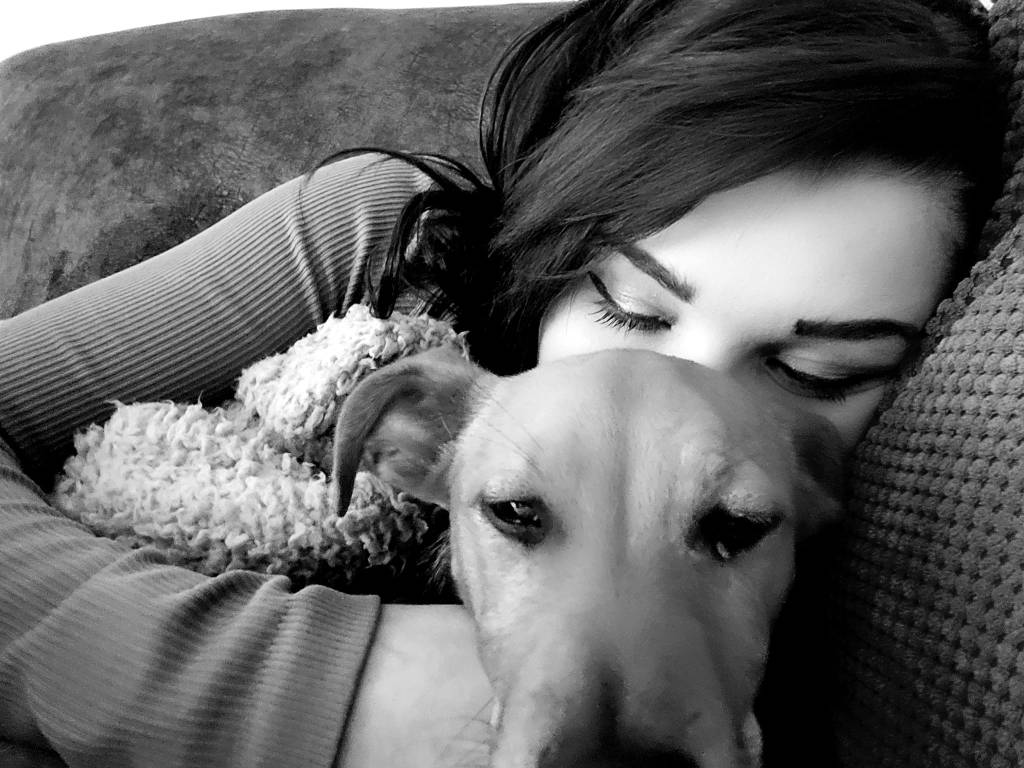
Dogs and the joy of being
Dogs are honest in a way that writers sometimes forget how to be, mainly because dogs live entirely in the present. They don’t have any need to pretend they’re more complex than they are. If they’re tired, they sleep. If they want affection, they’ll nudge you for it. If it’s raining and they don’t want to go out, you’ll know because you spend hours trying to manoeuvre their rump off the back step and into the garden to piss.
It always grounds me, when I’m huffing over a manuscript, to see my dog bounding in, tail flapping, like he can’t wait to see what the day holds. Every morning, he’s delighted to burst into the bedroom, as though he needs to remind me it might just be the best day ever. Ted doesn’t wake burdened with grudges (even if he’s growled at me the night before at being put in the kitchen) or worries that things might go wrong. Every day, and every moment, is entirely new, and just as stuffed with possibilities.
A walk is still the most exciting thing ever, even if it’s the same route. His food, which is mostly the same but only varies on whether it’s beef, turkey or chicken, will still be the best meal ever.
What if I approached my writing with the mindset of a dog? What if I sat down at my desk and instead of anticipating the worst piece of writing ever, I changed by perspective and thought this might turn out to be the best thing I’ve ever written? I’ve been busy plotting a novel over the past couple of weeks; something I’ve been scared to do for a while. But I’ve got an idea I can’t let go.
Over these past weeks, I’ve become deeply appreciative of that little snudge on the cheek when I’ve been staring at my laptop too long to tell me that it’s time to get outside for an hour.
On the wind-whipped marshes, curlews pick at the sand on elegant legs. Their calls rise and fall in a slow, melodic whistle. Sometimes, if I’m lucky, I spot an egret tiptoeing through the shallows, neck curved like a question mark, white feathers immaculate despite the sludge. Or a marsh harrier, low and deliberate, scanning the reeds with its fierce eyes.
In July, the hedgerows fizzle into colour and the paths drip with buttery-yellow crocuses unfurling from slim stems. On hot days, even the muddiest path cracks underfoot. Sometimes I pause to observe the heat haze rising off the mudflats and the unmistakable perfume of sun-baked salt and horse-musk.
Ted bounds through the grass like a kangaroo that’s just been released into the wild, as if to say: “Look! This is the best place ever!”
During the walk, characters talk in my head. Doubts quiet. The tide curls itself across the sand like an old blanket, spitting gulls into the landscape. On nearly every outing, I find myself prising a cockleshell from between Ted’s jaws, which he is never particularly happy about.
But we’re both very much in the moment, which is what both of us are out here for.
After these walks, I usually return home, refreshed and ready to write. And I’ll make sure to place a blanket across my lap for Ted to curl up on while the writing flows.
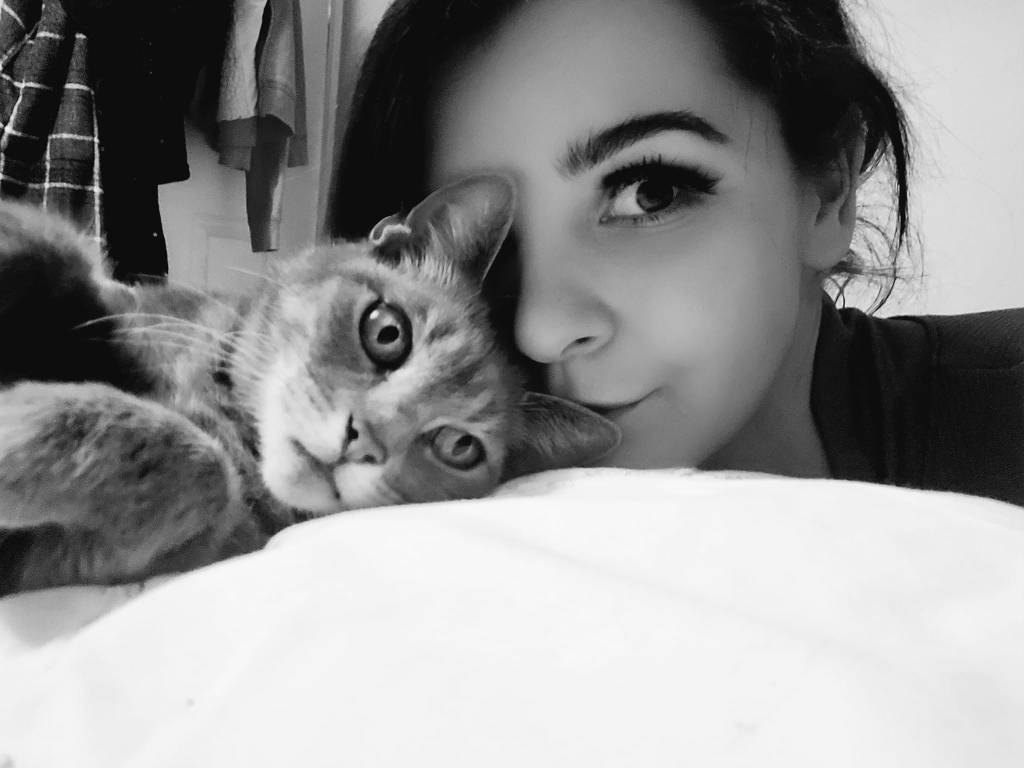
Your cat doesn’t care about your poetry
Ah, cats. I think, personality-wise, I’m probably a cat person even though I’ve always grown up with dogs. I just have great admiration for the way they’re unafraid to let you know they want you to piss off until they want attention – and even then, you must smoothe them in the right way or they’ll smack you unashamedly with a fuzzy paw.
For years, I had a cat called Pixie. I moved to live with my grandparents for six years and by the time I went to move out, she’d fully changed loyalties and had become my Nan’s best friend. So that’s where she still lives, very happily, and only sometimes acknowledges me when I pop in with cake on a Saturday afternoon.
The rest of the time, she looks at me like I’m pond scum.
I admire the way cats have a quiet confidence no one argues with. They press themselves into the warmest spot they can find – often your laptop keyboard – and act as if they’ve always lived there. And if you want to try moving them, then tough bloody luck.
There’s something soothing about the small rituals cats perform beside us, whether that’s the careful washing of a paw or the full-body stretch that would make any yoga enthusiast burn with envy. Sometimes, they might give you the blink that says, “I see you, even if I don’t understand a bloody word you’re saying.”
You can go from feeling quietly pleased with a sentence to certain you’re a fraud in the space of half a cup of coffee. One rejection, one offhand comment or one reread of something you thought was brilliant the night before is enough to bring it all down.
Cats, in their wonderfully nonchalant way, couldn’t give a shit. They’ll sit on your notebook like it belongs to them and stare at you until you feed them. And in their complete disregard for your neuroses, you might start to believe it too. Alright, they probably aren’t going to convince you that you’re a genius, but that you’re still a person worth being around. A cat’s affection, when it’s given, feels earned.
And if they’ve decided your lap is worthy of their precious sleep, who are you to argue with that? You matter.
And so do your words.
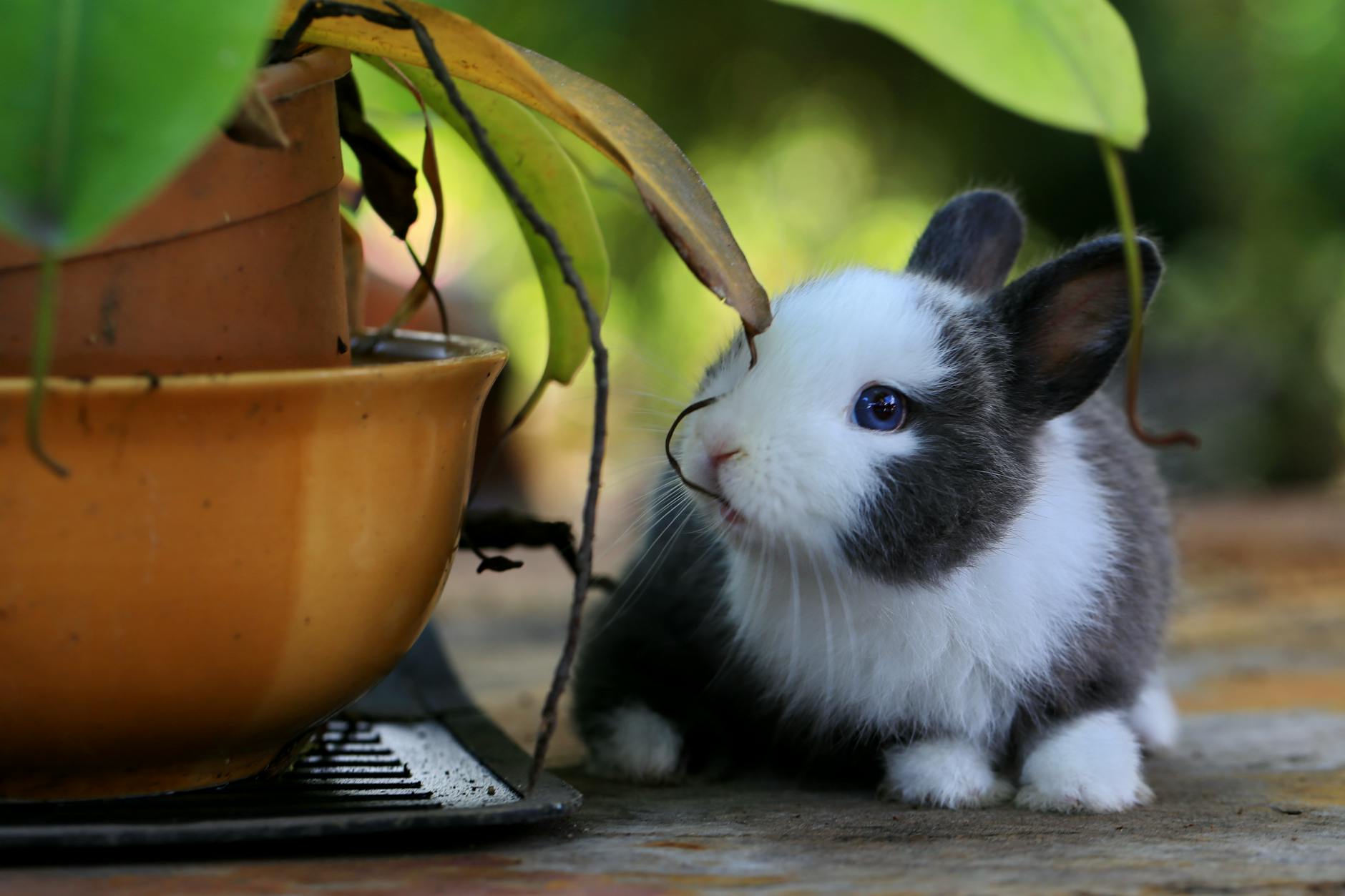
The tiny creatures in the background
Not every writing companion is big enough to curl against your legs. Some are the size of a paperback, or smaller.
Rabbits, for example, don’t make noise, but they move around the room like small ghosts, hopping and observing. Sometimes they rest, full-flop, beside you. And sometimes they sit upright and listen to you read aloud, ears flicking slightly as though they understand what you’re saying, even if they’re just thinking about kale and making rabbit babies.
Beatrix Potter didn’t create Peter Rabbit out of nothing. She spent her life really watching the animals that most people ignored; whether that was the soft velvet of a rabbit’s ear, the nervous shuffle of paws in straw, or the shunting of a nervous hedgehog as it shuffled over the back lawn.
Some of the best writing doesn’t come from trying really hard to be clever or brilliant or impressive. It often shows up in the less impressive moments, when you’ve slowed down enough to actually notice what’s in front of you; whether that’s the rustle of a hamster rearranging its bedding in the dark, or the way a rabbit hesitates for half a second before deciding whether it trusts you, or the quick, bright flicker of a rat’s eyes as it perches on your shoulder, sniffing the air.
Perhaps the reason these moments keep turning up in our writing is that they remind us that we’re not the only ones trying to make sense of life out of the scraps we’re given.
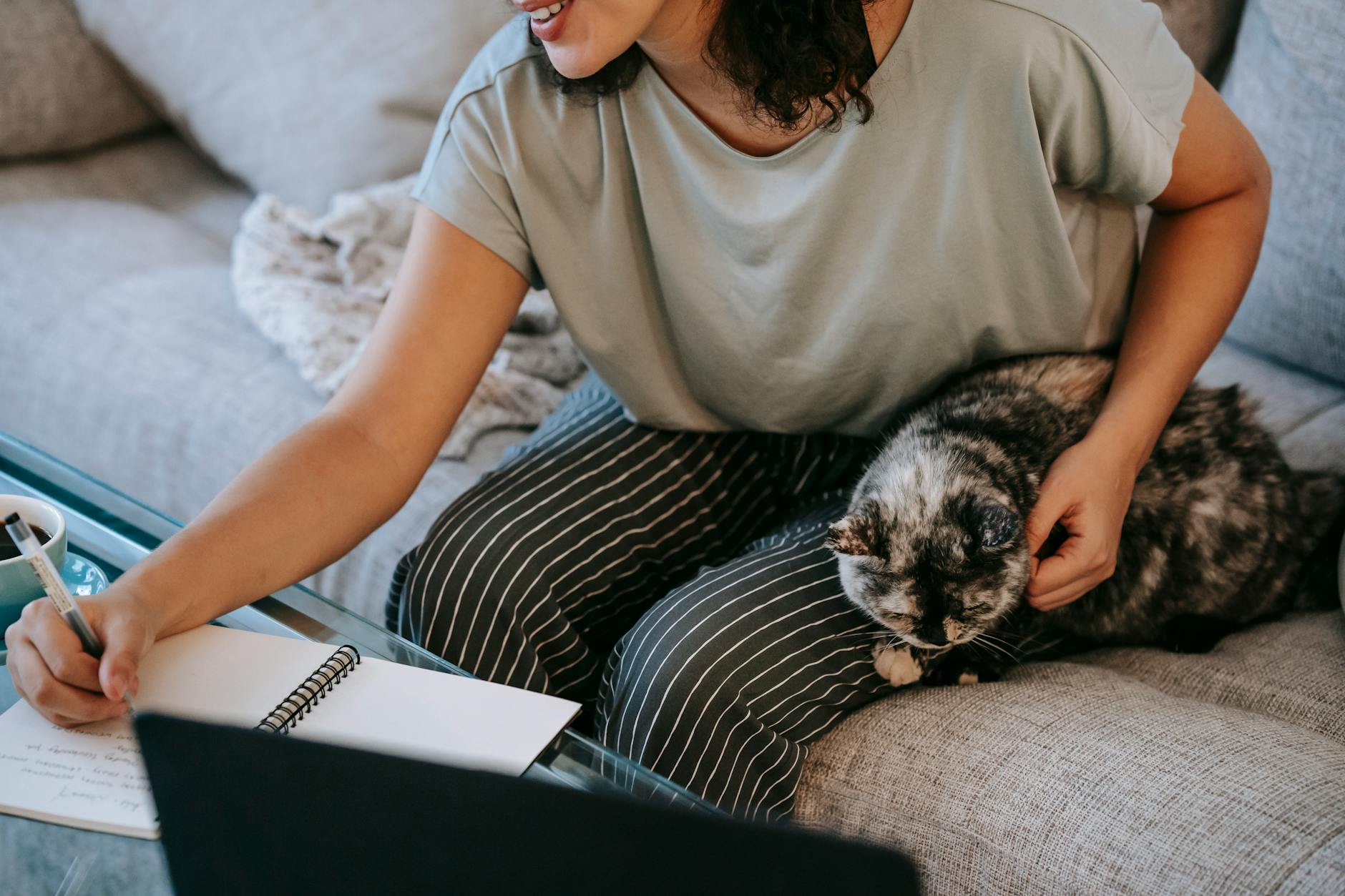
Some of the best writers didn’t write alone
“I write so much because my cat sits on my lap. She purrs so I don’t want to get up. She’s so much more calming than my husband,” Joyce Carol-Oates once said.
Virginia Woolf wrote with her cocker spaniel Pinka beside her, often more interested in the sun patch on the floor than in Woolf’s latest paragraph. T.S. Eliot was so taken with cats that he wrote a whole collection for them. Ernest Hemingway once said: “A cat has absolute emotional honesty: human beings, for one reason or another, may hide their feelings, but a cat does not.” He once owned over 50 cats, claiming that “one cat just leads to another.”
Ernest Hemingway’s house in Key West still houses descendants of his beloved six-toed cats.
Pets are good at living, which is a kind of art in itself. And they teach us how to do the same (because humans, for some reason, often forget how). Our beloved animals remind us not to take ourselves too seriously. I mean, have you ever tried maintaining a full sense of literary angst when a dog has just thrown a squeaky rubber banana in your face? They don’t care about your deadlines or that your writing voice seems off today, or that there’s a big, gaping plot hole you’ve only noticed now you’re halfway into your draft.
They’re just really glad you’re here.
And when they remind you to pause and live in the moment, they’re also helping you write. Writing is never just about locking yourself in your room to hit word counts.
 Natalie Ann Holborow
Leave a comment