While writing this book, I was asked, “What is wild running?”
And honestly, I couldn’t answer. I’d assumed it meant trail running, or at least some sort of run that involved brambles, thick mud or feral animals. I like to think of wild running as an act of remembering why you run. It’s about being in your body, in a place, at a pace that allows noticing, for example, the way light filters through pine, or the moment a heron lifts into flight as you round the bend. It’s less about speed or stats, and more about connection, rhythm, and presence.
Sometimes, it’s a meditation. Sometimes, it’s a mess. Often, it’s both (as you’ll see in the book).
Wild running, I have come to decide, is running as a natural instinct.
It’s honestly been a joy to write, but it’s also taught me a lot about myself not only as a writer but as a person too (I know this sounds soppy but please don’t spew). What started as a guidebook later evolved into something else entirely; part-memoir, part-love letter to Wales and part-examination of the mysterious creative process that we writers love to immerse ourselves in, even if it’s uncomfortable at times.
With the book now launched and events underway, you’ll learn a lot about the messiness of running. But I also want to lift the curtain on what it’s like to write the book; so often, this process is covered up and we only ever see the work once it’s edited and polished. Let’s talk about the messy, wonderful process of writing something unfamiliar.
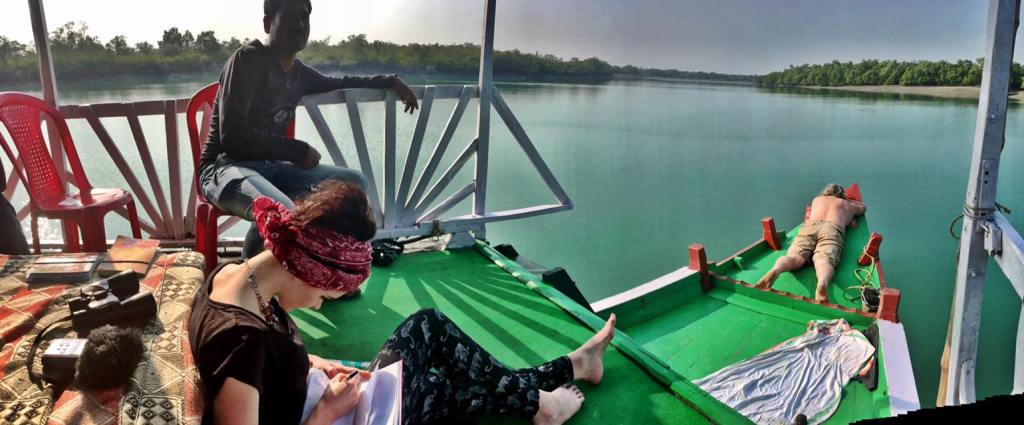
Breaking out of the ‘poet’ box
By ‘poet box’, I mean that I’ve always been referred to as a poet in my writing career. In truth, my passion for writing started well before I even realised I loved poetry (fun fact: I bloody hated it until the age of 16 when I discovered Seamus Heaney and he made me cry in the best way). I always wanted to return to writing other things: fiction, non-fiction, long fiction, just as I did over a decade ago at uni, but I’d got too comfortable. But, you know, change is scary.
Writing this book meant stepping out of what I knew. It’s a strange feeling, leaving your comfort zone to write something entirely different. You feel like you’re speaking a version of your voice that you’re not sure will land, because no one knows it yet but you. And even you are only really just discovering it. It’s exciting, but a bit unnerving.
I started writing this by trying to go back to academic writing and tried to make it work. I stuck to the structure, kept everything tidy and argued my points like I was supposed to. But it always felt like I was holding something back, and like I was editing out the parts of me that actually cared. It never sounded quite like me, and over time I realised I didn’t want to keep pretending it did. If I was bored out of my mind writing it, then my readers wouldn’t have much fun either.
So I started over. This time, I wrote as though I was running beside the reader, chatting just as my thoughts do to myself when I’m running (if ever you’ve driven past me waving while I’m running, I’m not ignoring you – I am honestly just talking to myself in my head). If you’ve ever run with someone for long enough, you’ll know how people really open up to you when you’re panting up a hill, your legs cramping. You share pain and you share relief when you reach the descent. I knew, when I wrote this book, that I wanted to capture that honesty. And so the people who accompanied me all play a very important part in this book, because I got to see things through their eyes as well as my own.
Through this, I found a writing voice that felt authentically my own. Will people like it? Who knows. But if you read these blogs, it’s basically me being myself – just as I do here – but also letting the poetry come through too. Because it does, often, when I run.
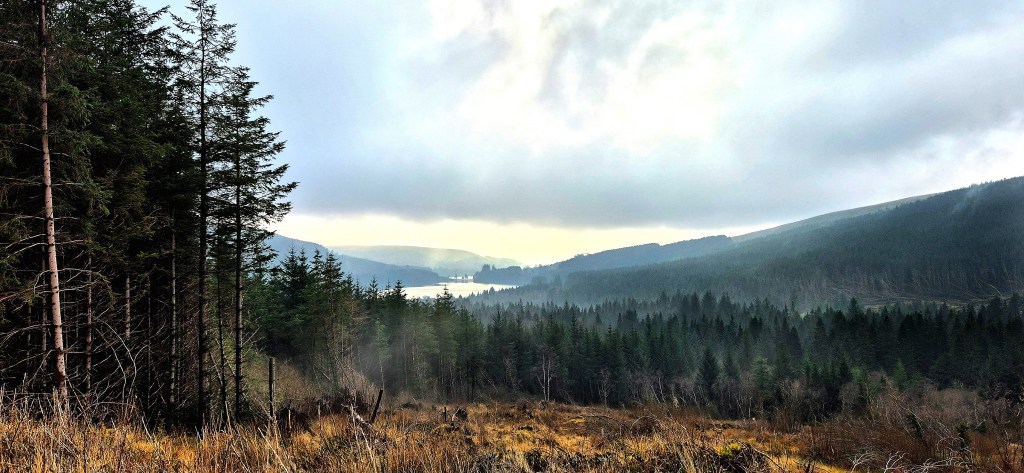
The places that shaped the book
Two key things shaped this book: people and place. Yes, there’s folklore and history and running science and all the rest of it. But without these two key things, this book simply would have failed.
South Wales is in the bones of this book: the damp stone, the wind and the smell of bracken. These places shaped my body and my voice long before I thought of them as settings for a book. In slowing down, I found something important: that running these wild parts of South Wales invites you to really notice things and not just sleepwalk through the route. To run, but also to look, listen and notice how the light melts upon the moss in late spring. How garlic flowers unfurl like origami stars in May. How a ruined abbey can look like a cathedral of ghosts when the morning mist is dense enough.
Pen Pych warmed me. Llanrhidian was home. Pen Pych tested me big time. At one point, I thought a helicopter would find my bones three days later in the arse-end of nowhere on a hill somewhere above the Brombil Reservoir. These places don’t just hold the memories: they are the memories. There was the hill I ran when I was grieving. There are fields where I stopped and cried without knowing why. There were stretches of smog-choked roads where I had epiphanies out of the blue.
When the place becomes a character of its own, it also changes how you move through it. You stop treating it like a backdrop, and start moving with more respect, and more attention. Loughor Estuary, for example, all silver mudflats and winding rivers, is where I ran for so many years through my late teens and twenties. I photographed it almost every morning; in every weather, in every light. It still looked like it was dressed differently every time, but provided me with the familiarity and comfort I needed for all those years.
And maybe that’s what wild running really is, when you strip it all back: moving with nature, not just simply taking a photo and turning away. I let it guide me, met it as it was, and paid attention as you went. I learned to listen to the landscape rather than rush through it, and in time, I trusted it to shape my pace, my breath, and my thoughts.

Writing without a map
Maybe what surprised me most in the end with writing this book was how unnerving it can be to sit with something that hasn’t decided what it wants to be yet, and still keep showing up for it.
Over time, I got good at being structured. But think I stopped trusting the part of me that wanted to explore: to write into the unknown without checking if it was going to work first. This book, which started out as a tidy little project, didn’t let me stay in that space for long. And so it just so happened to crack the door open again.
And now, I want more. I want to push further into the things I left behind. Fiction. Scripts. Pushing my poetry even further. I want to write work that scares me a little, because I think that’s where you discover your authentic voice. I don’t want to perform clarity just for the sake of it – hell, I’d rather risk getting lost. Even if it takes most of the day, I still find my way eventually.
I think that’s the most important thing I learned through all of this: that it’s okay to not know what you’re doing, as long as you keep chasing whatever pulls at you, even if you’re not sure what it is yet.
I hope you get as much enjoyment from reading this book as I did in the messy, glorious process of running and writing it.
 Natalie Ann Holborow
Leave a comment