Congratulations, you’ve just finished a poem. Well, you think you have. You’ve been swapping words and reconstructing line breaks like a Lego construction for hours. It works now, you’re 99% sure of it.
You put it away for a bit, come back and read it again expecting that same level of relieved satisfaction you felt earlier. Only this time, you think: “Oh, God. It’s a bit…well, simple isn’t it? Did I cut too much imagery? Have I been too ruthless?”
Then you revert your document back to your first bloated, messy draft and begin the whole process again. There’s a voice in your head that tells you: “You could add more. You could hide this better. Make it longer. Stranger. Cleverer. More poetic. Fuck it, let’s add some peaches or something.” (Poets bloody love peaches in poems for some reason.)
But is ‘simple’ really a bad thing?
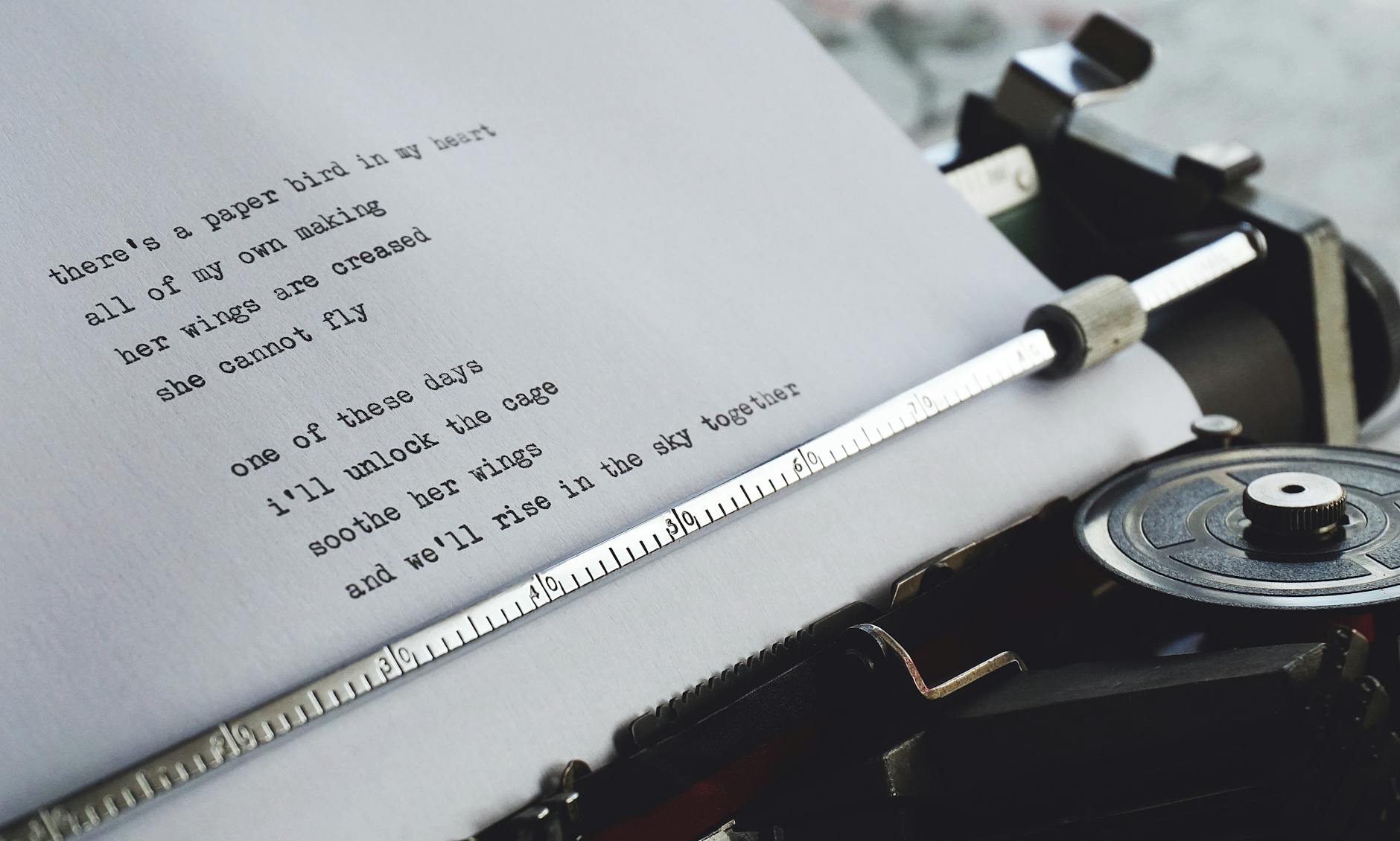
What is a poem anyway?
At college, I thought poems were puzzles. And that the cleverer you were, the longer it took to solve them and the more meaning you could unearth the more you dug between the lines.
We had to write essays about why the road was yellow and not green. You could write a poem about nearly drowning in a pool of custard and someone would immediately ask you what the custard represented.
Poetry, I was convinced, was for metaphors and myth. It was for writing that sounded like it belonged in a museum or as a set text in an Oxbridge entrance exam. And then you grow up and you keep writing like that, or maybe you stop writing entirely, because everything you try comes out sounding “too simple.”
Sometimes the simplest poems are the most powerful. I distinctly remember being blown away by how moved I was by Brian Patten’s The Bee’s Last Journey to the Rose. It’s such a short piece, with simple, clean language, but it still made me cry:
I came first through the warm grass
Humming with Spring,
And now swim through the evening’s
Soft sunlight gone cold.
I am old in this green ocean
Going a final time to the rose.
North wind, until I reach it
Keep your icy breath away
That changes pollen into dust.
Let me be drunk on this scent a final time,
Then blow if you must.
(from ‘Love Poems’ by Brian Patten)
There’s enough there to unpick without being overblown. It’s expertly pared back to the bones, but images such as swimming through “the evening’s / soft sunlight gone cold” and “the warm grass / Humming with spring” are allowed to really shine without being diluted by competing images. By the time you reach the end with its unexpected but gorgeous little rhyme, that “Then blow if you must” is enough to break your heart a little.
Poetry should leave you feeling somewhat changed or at least touched by the end. It should give you a little ‘ah’ moment of satisfaction if it doesn’t otherwise send you into full-blown tears. Poems don’t have to be complex to do this – they just need to say what they want to say well. And sometimes what’s unsaid can hit you harder than what’s on the page.
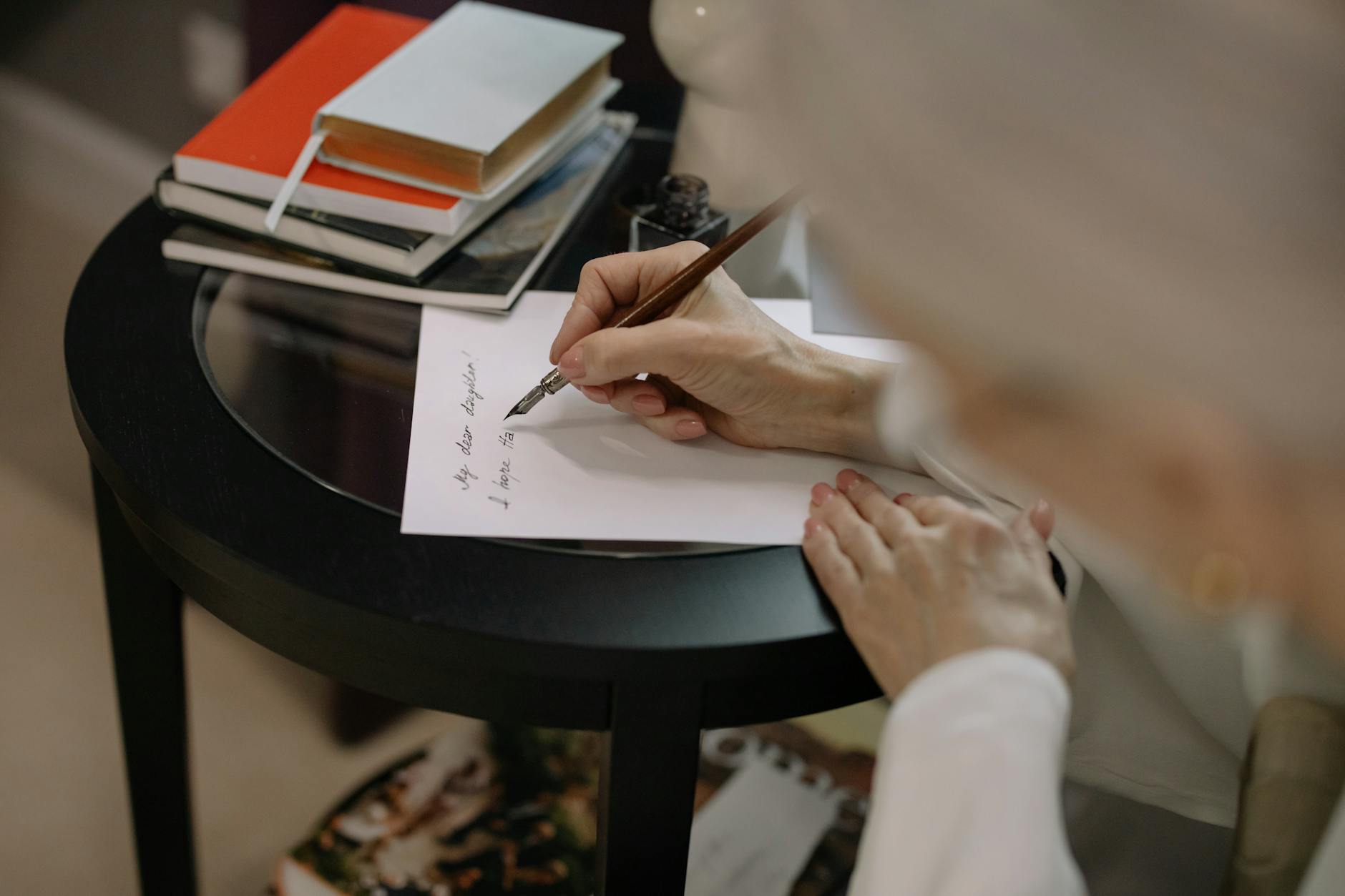
‘Simple’ isn’t a synonym for ‘unskilled’
If anything, knowing when to kill your darlings when it comes to editing takes a lot of discipline and skill. If I go back to my university portfolio, I remember a comment or two that my poems “showed promise” and were “diamonds in the rough”. But I’d worked so hard to get all these crackling imagery in there! I’d spent hours! Here’s an example of what I mean and how, actually, looking back with everything I’ve learned about editing poems would change how I approach things now. There was a poem I wrote called Sunflower, the beginning of which went like this:
The burial was easy.
I took it in my hands to thrust the shovel,
turned the earth outside itself—
lime-sticky breeze,
gold-roaring sun.
You asked me, softly,
would the dirt simply crack like a bone
or rise, a dusty mirage?
I shrugged and patted the ruddy soil
dust-sucking the waters away.
Summer burned X on the spot.
I recently found this folder of old poems and this poem in particular was bloated with imagery and tended towards spelling things out for the reader, then hiding the meaning with more obscure imagery. For example, do we need “Summer burned X on the spot” when the sun is already “gold-roaring”? We can assume it’s bloody hot out there. Do we need “dust-sucking” when “sucking” would simply do? We know the earth is dry by the “dusty mirage” and “dirt” mentioned previously. I just had a serious problem with cutting images out, so my tendency was to stick them all in. Even words like “simply” become clutter and don’t actually serve a purpose.
A couple of weeks ago, I tried to see if there was anything salvageable in this folder. This one, after a rewrite, became the poem Germinate. I decided the sun imagery was battling too hard against the huge sunflower. Did we need to know it’s a sunflower? The core message was about something taking root and growing. The type of flower doesn’t really change anything. The start then became this simpler one:
It begins in a pickle jar.
A green arm, emerging from a sugar-armour.
(The seed coat is a kind of prison.)
It keeps moving.
Roots are not roots at first. They are pale ideas of roots,
like sketches flicked in the dark.
I dig a bed for it.
The sound of the shovel in wet dirt:
something both wild and surgical.
The language might be simpler, but I feel that it says more. I’m not distracted by competing images – the focus remains on the seed and the intention to help it grow. I’m not scratching my head over whether the poem is about sunflowers, incessant heat or the action of digging.
In this case, simple worked far more effectively and naturally led the reader into the rest of the poem with its easier flow. The “sketches flicked in the dark” needed to stand alone against a starker background if it was going to work, like a spotlight was falling upon the tiny plant.
Exercise – ‘Diamonds in the rough’: Dig up an old folder of abandoned poems. What’s working? What isn’t? Do you have too many conflicting points of focus? Edit ruthlessly and see if you can create something entirely new from it. You might surprise yourself.

A poem doesn’t need to be a riddle
I’m going to be vulnerable here and share one of the stanzas in an old poem that makes me cringe hard. The poem was called ‘Fiction’ (oh-ho, a poem called ‘Fiction’, how very clever). I read it once at an open mic night at nineteen and someone actually told me that it didn’t quite work as well as my others. And, looking back, they were right, too:
Dust-jackets. Blanks.
We have sewn ourselves shut,
hidden the fiction of bodies—
our leaning, secret undressing
a half-hearted attempt
at dedication.
Flat on the rug, you speak volumes
in a lost language.
To fiction.
You bunch my wrists like bouquets.
I genuinely can’t tell you what this poem is about and I couldn’t tell you then either; I just liked the images. It was, essentially, a bit like wallpaper. You can look at it but you have no clue what’s underneath.
This was not one I wanted to salvage, mainly because I have no bloody idea what I was on about in the first place. Why the two stand-alone lines, “To fiction” and “You bunch my wrists like bouquets”? What were they trying to say?
Sod all, that’s what. I was trying to create pretty images then expect my reader to solve a riddle I didn’t even have an answer for in the first place. A strange thing happens when people start calling themselves poets and I fell into this trap, too. We’ll break lines in the middle of sentences, even when it doesn’t help the rhythm. Suddenly we’re referencing eight different species of flowers (again) and moons and blood and shells and planets all in one poem, even though we were just writing about waiting for a taxi home from the pub after a bad drunken kiss.
There’s something terrifying about saying what you mean (a bit like standing in front of a room in your ugliest pair of pants and just hoping they’ll be kind). I know I’ve definitely been guilty of adding a huge amount of unnecessary, distracting metaphors to soften or conceal what I’m trying to say. But that really isn’t the point of why I’m writing. So I had to be ruthless and I had to be a little more brave if I wanted my poems to actually connect with people.
Some of the most powerful poems are so plain they feel like conversations. Take Harlem by the great Langston Hughes:
“What happens to a dream deferred?
Does it dry up
like a raisin in the sun?”
He could have really packed in a lot of imagery here and hidden what this “dream deferred” means. But instead, he simply gives us a raisin.
We notice it and we remember it. The simplicity of it hurts just as it’s supposed to.

Complexity isn’t the enemy (so long as it’s saying something)
What makes a poem “good”? Every critic, writer, teacher or poetry lover will likely tell you something slightly different, and the answer is very much subjective. So I think it helps to change the question and instead ask yourself: “What makes you connect with a poem?”
TS Eliot once said that the greatest difficulty for a poet is to distinguish between “what one really feels and what one would like to feel”. For Wendy Cope, the most important and helpful question she asks herself when working on a poem is “Am I telling the truth?” We connect with poems that are authentic, so perhaps the answer lies in the poem’s authenticity. And perhaps this is why my previous attempts to hide the truth in far too many clever (or so I thought), overloaded metaphors fell flat in my early drafts. I like Cope’s observation: “If the poet is, knowingly or unknowingly, being dishonest, the poem will fail. We need to search for the words and images that accurately convey the truth of the matter.”
I should say now (before someone passively aggressively sends me a Dylan Thomas poem without realising I’m actually a massive fan of the Swansea bard) that I do love complex poems. Some of my favourite lines are the ones I’ve had to read five times, or Google, or sit with for months before they clicked. Dylan Thomas and Sylvia Plath were obsessions of mine for years; the problem was, I assumed the power was in the language and not in the meaning or truth of the poems themselves.
I love poems that stretch language so far it snaps, and then somehow still find a way to pull you back in. I love the ones that make you feel like you’ve just glimpsed something through a stained glass window and it takes you a while to identify what it is. Sometimes the messiness and surrealness don’t obscure the truth because they are the truth. Real feelings are rarely tidy; grief doesn’t always arrive in clean stanzas and rage doesn’t always rhyme.
The poem still has to mean something and still has to be reaching for something, even if it’s just to say “this is too complicated for neat language, so here’s what it looks like to me in this moment.”
Kaveh Akbar is a master of this. His lines are often disjointed, full of sacred and irreverent images mashed together, but they’re always reaching for something bigger than just sound. In Heritage, he writes:
it’s a myth
that love lives in the heart it lives in the throat we push it out
when we speak when we gasp we take a little for ourselves
(from ‘Calling a Wolf a Wolf’ by Kaveh Akbar)
It’s strange and aching and deliberately leaves parts unspoken, but you don’t need to fully “get” it on the first reading to feel it. There’s an insightful and honest account of how he wrote the poem on such a painful subject here.
Some things to tell yourself for your next poem draft…
If you’ve ever been told your poems are “too simple,” here’s what I want you to know and what I want to remember too after reading this blog post:
- You don’t need to impress anyone. You’re not at a job interview; your only job as a poet is to tell your truth.
- Your life, as it is, is enough to write about. Yeah, even the bits with washing up in them. In fact, washing the dishes is usually where I find myself experiencing an unexpected creative peak.
- Let down your guard. Writers are brave people. Don’t hide away your core message because you’re worried about what people will think. People connect with human emotion when it’s at its most raw and honest.
- You’re allowed to sound like yourself. In fact, it helps.
I hope this post has given you permission to write the way you’re drawn to naturally. Don’t delete your truth. Don’t add ten seagulls to your poems. And don’t be afraid to kill your darlings. Let the most important messages breathe without being obscured.
 Natalie Ann Holborow
Leave a comment