10 years ago, I submitted my first book manuscript. I’ve learned a lot, made many mistakes, celebrated successes and almost quit writing many times – yet somehow, always found myself picking my pen back up again, no matter how dramatic my exit.
A decade feels like a long time to go through the ups and downs of writing and I’m still constantly learning, so I thought this might be a chance to reflect on the writing journey and share what I’ve found helpful since sending out my first ever submission.
I hope that at least one of these things helps you today, too.

1. You will fall into the comparison hole (often)
At some point, you’re going to scroll through another writer’s posts while you’re in a bit of a rut with your own writing and start questioning why you even bother with this whole writing thing at all. It’ll usually happen when you’re feeling fragile; perhaps when you’ve had a string of rejections or when your writing just feels like it has all the effervescence of a dead mackerel.
Perhaps someone on Instagram has just been longlisted for a prize you didn’t even know existed but now, in this moment, you deeply want too. You’ll read their post, look at their moody headshot and crisply typeset cover design and think, “Why them and not me?” And then, “Is this even worth it?” And then (if you’re anything like me), “Maybe I should just become a cat cafe manager.”
By all means, manage a cat cafe, if that’s where your dreams are. It’s probably not an easy task, though. But you absolutely don’t need to quit writing because of someone else’s success. Remember, the person you’re comparing yourself to is in a different lane, with a different brain, a different timeline and a whole set of fears and insecurities that you can’t see through the filter. What you’re comparing is your ‘mess-in-progress’ to someone else’s curated milestone, and that’s not fair (to you or to them).
It’s okay to hurt and feel frustrated sometimes. It’s only natural. Chances are, the writers you’re comparing yourself to feel exactly the same doubts as you do, but never say it publicly. I’m always surprised to learn that the writers I most admire have just as many doubts and fears as I do. And I have a lot.
As cheesy as it sounds, try keeping a ‘small wins’ list, which can be a folder of kind messages, personal breakthroughs and tiny moments of joy in your writing life. Got a kind email from a reader? Put it in the folder. Glowing feedback from a friend or mentor? Keep that to look back on too. Often, we lose sight of how far we’ve come, so making some time for reflection helps. Here are some other things that are helpful to tell yourself when you’re feeling small:
- “Another person’s success is not my failure.”
- “I don’t know what they’ve had to give up to get there.”
- “I am building something at my own pace and that’s fine. This is what my timeline looks like.”
- “This feeling will pass. I will feel better after a snack.”
(I recommend M&S custard creams, by the way. The custard to biscuit ratio is a stunning thing to behold.)
2. Writing rejections will be frequent and brutal (but not final)
We all know the heart-sinking feeling of the polite email that lands in your inbox with all the warmth of a wet sock and says something like: “We’ve had a high number of submissions and unfortunately yours did not get selected this time.” You’ll get rejections for things you secretly thought were the best things you’d ever written and some for things you sent within one minute to the deadline, muttering, “Oh bollocks to it, this will do.”
Once or twice, you can shrug it off and move on. But when it’s the 20th time in a row, you start to lose your sparkle. You’ll tell yourself it doesn’t matter. You’ll nod along when people say “don’t take it personally.” But I know I have a tendency to lie on my bed face-down and text all my writing friends to tell them I’ve quit. There was definitely a patch last year where it felt like I was failing, over and over. Perhaps you feel like this sometimes, too.
Rejection is just a weird, unavoidable rite of passage, kind of like a badge that says:”HERE I AM, PUTTING MYSELF OUT THERE”. Because that’s what it means, really: you’re not hiding away, but giving it a shot. You’re being brave enough to submit work that means something to you, knowing full well someone might say no and to be honest, that sounds a lot more like courage than failure.
Sometimes, it may be that the time and place just wasn’t right for that particular piece of writing. But if the same piece keeps coming back, start unpicking it. Share it with friends who can give you honest, constructive feedback. Was the work really the best it could be? Without building upon feedback or probing deeper, you’ll make it incredibly difficult for yourself to grow. To see what I mean, dig out some old rejections from years ago. How has your writing changed since then? It’s only when you start looking back and comparing it to now that you start to see the growth has taken place. What’s shaped that growth? Most likely, it’s a combination of feedback, failure, goal-setting, editing, reworking and continuously questioning and learning from others you admire. It comes from hard work, perseverance and taking constructive criticism on board.
Don’t tell yourself you’re a bad writer because of a disappointing rejection. We all deal with rejection, and while it does get easier generally, there’ll always be one or two that still sting a bit more than you hoped. Even the biggest writers will be turned away at times, something which I often forget when I’m beating myself up over the third “no” of the week.
Dust yourself off. Seek feedback. Do the work. And then take a deep breath and go again.
3. The first draft is allowed to be rubbish
No, really, it is. It’s just that nobody told me this.
My first drafts are full of run-on sentences. There are metaphors that make me cringe, three different tenses fighting for dominance and the exact same phrase repeated four times because I didn’t know how to end the paragraph so I just panicked and kept typing. I actually found the very first version of my debut book And Suddenly You Find Yourself the other day, which at the time was called Goodnight Indigo.
And it’s honestly not great. I had to rewrite that manuscript many times before it got accepted, and that’s before it even reached the editing work from the publisher. The end result looks nothing like the initial draft.
I’ve had to get comfortable with that again now I’m trying out different genres. I have stacks of stories that lead nowhere and will be sent nowhere. But sometimes, they live in my head for a while and spark entirely new pieces. Writing my first non-fiction book, Wild Running, has been a challenge, though an enjoyable one. The deadline was tight, so I know it’s messier than I wanted it to be, but what’s there is the raw stuff that makes me feel things when I run. The editing can come later. I want to make sure that emotion is in there for people to relate to before I end up diluting it by self-editing too much.
Make your first draft about discovering your why. What do you want people to take from it? Why should they care? Why should certain parts deserve a place in this book (and which ones need editing or removing)? Above all, have fun with it. Don’t worry about the mess. Your first draft isn’t a finished product. It’s the scaffolding; the map drawn in pencil; the damp earth from where (eventually) something green and weirdly beautiful will grow.
Somewhere underneath all the false starts and repetitive lines is the real heartbeat of the work. You just haven’t heard it clearly yet, but you will. For now, just have fun unearthing it.
4. Your writing “voice” will constantly evolve
You’ll often hear people talk about finding your “voice”, like it’s a fiver you’ve just found in your back pocket.
Your writing voice isn’t something you stumble across: it’s more like a muscle you build. Or perhaps a language you learn by accident.
That old poem that makes you cringe now (I have loads of those) was part of your writing voice developing. Every short story that goes off the rails by paragraph four also counts. Honestly, if someone ever hacks my Google Drive and reads some of my drafts and writing experiments, I will go to space with Katy Perry and stay there.
The way you write now might feel completely different to how you wrote five years ago. That’s not a problem, though. That’s progress. One day your writing is sparse and sharp, and the next day it’s dreamy and lyrical and full of fruit-related metaphors. You might try sounding like your favourite author, then hate it a week later. Or you might fall in love with a new style and mimic it for a while before it doesn’t quite fit anymore.
This is all part of the process. It doesn’t mean you’re doing it wrong. You’re just learning how your voice moves and how it changes depending on what you’re trying to say.
The person you are at 25 won’t be the same at 35. So why would your writing be? You’re not stuck in one version of yourself forever and, honestly, that’s a good thing.
5. Your softest work might be the strongest
We think that the more “crafted” something is, the more it will impress. And sometimes that’s true. But more often, it’s the raw pieces (ie.the ones that feel like confessions, or quiet recognitions) that stay with people long after they’ve read them. There’s something powerful in reading a piece of writing that says, “I’ve felt this too, even if I didn’t know how to say it until now.”
That kind of honesty gives people permission to feel seen. It reminds them that they’re not the only ones carrying grief, or confusion or joy that’s a little too big to name.
As writers, it’s easy to believe we need to be clever, original or careful. But sometimes the most important thing we can do is be sincere. To resist the urge to make it more palatable, or more poetic, or more “publishable” and instead just tell the truth the way only we can.
I’m not saying you have to share everything. Not all writing is meant for public view, and not everything you write has to be transformed into content. But if there’s a piece that feels important and made you feel something while you were writing it, then it’s worth asking yourself whether it might matter to someone else, too.
Because chances are, it will.
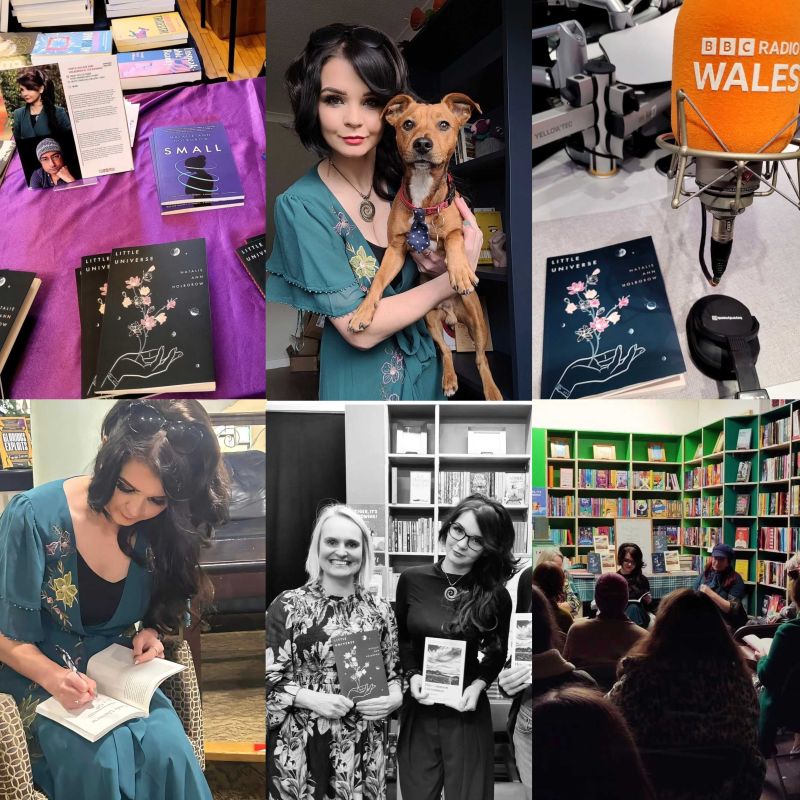
And if even one person reads it and thinks, “Thank you, I didn’t know how to say that either,” then that’s reason enough to be brave. Small was terrifying to release. I’d never written about my struggles with an eating disorder like that, but even now I’ll get emails from readers who have found it helped them. And, weirdly, writing it was instrumental in my healing too.
Little Universe still hurts me, at times, to read aloud in public. But people have related. It has helped me feel what I needed to feel and helped me heal. Of course, there were poems that never made it. They were purely for my eyes only.
But if there’s a poem that feels honest and the only thing holding you back is that people will think less of you, you’ll often be surprised. People are, generally, on your side. And in a world that often prizes polish over presence, that kind of connection matters more than we realise.
So if you’re sitting on something you wrote, maybe today’s the day you let it breathe. Because you never know who needs to read it. And you never know who’s waiting to feel less alone.
A final word
Somewhere in the middle of all these ups and downs, there’s also this quiet, stubborn love for the work – for example, the way a sentence sometimes surprises you. Or for the strange joy of writing a character into existence or finding the exact right word after six months of not-quite-right ones. Or for the messages from readers who say, “this helped me,” or “I felt this too.” For the reminder that your words, including the ones you almost didn’t write, can reach someone else and make them feel less alone.
This, more than anything, is what keeps me coming back even in those moments when I never think I can write a single thing ever again.
So if you’re just starting out, or if you’re halfway through and thinking about quitting: please know that the mess is part of it and the fear is part of it. The not-knowing and the self-doubt is all completely normal.
You don’t need to have it all figured out. You just need to keep writing. And maybe, in a few years’ time, you’ll look back and see how far you’ve come, even when you felt like you couldn’t.

 Natalie Ann Holborow
Leave a comment